Is anyone else enjoying an inward smile of satisfaction about how Tiger Woods is failing to win any majors besides me?
I suppose I feel more than the normal amount of schadenfreude partly because of jealousy. Tiger made an awful lot of money over the years. And he got an awful lot of adulation, not only from the fans, but from the media, which, as you would expect, fell all over itself celebrating the first black golfer to contend for the title of best ever.
While there was nothing really noxious about Tiger, there was really nothing to like, either. He had a closely guarded personality, and never said anything revealing, or even witty. His primary mission always seemed to be to preserve his sponsorships. (Whoever figured a guy named Tiger could be so bland?)
I actually liked him a little bit more when it turned out he'd had all those mistresses on the side.
But then came that holier-than-thou non-confession confession and the strong denials that he'd ever taken steroids.
(Whatever you say, Lance.)
So, I find myself smirking every time I read that he's out of contention at another tournament.
Sunday, August 11, 2013


Punctuation marks for the dainty
I've never understood the point of using punctuation marks rather than the actual word when swearing. If you write, "f@*&ing" instead of "fucking," for instance, what exact does it prove? That you are somehow too good to use the actual word? That you are refined? That you are too good a person to swear?
Everybody knows exactly what you're saying, and the message is exactly the same. So what's the difference?
I've never personally been convinced of a person's essential goodness by the fact that he writes "m**********r" rather than "motherfucker."
It's just a word. Sorry, but if you want to show your good character, that takes a little more work.
If you want to convince me of your dainty comportment, well, it does go a little way. But daintiness and good character are not the same thing.
As to those who are offended by swears, being easily "offended" is the cheapest -- and usually falsest - way of showing good character.
Myself, I try not to overuse such words, but only because they tend to signal a lack of imagination. ("You fucking asshole" is the lamest of insults, since it could be applied to absolutely anybody; if you want to hurt someone, tailor your insult.)
And "fucking"'s use for purposes of emphasis is too meaningless for my taste.
Then again, I don't avoid use of the word either. I will admit, however, I use it less in writing than in speech, since I have the luxury of being able to edit myself on paper, and with a little time to think I can usually find other words which are both more descriptive and more apt.
Anyway, that's where I stand on the matter. If you don't like it, fuck you. (Another meaningless phrase, I guess, since suggesting people they engage in an act they enjoy is hardly the same as damning them.)
Addendum, a few minutes later: it's just been pointed out to me that a good part of the reason you see words written with punctuation marks like that is because newspapers don't want to run afoul of FCC guidelines. True enough. So maybe my complaint is with the FCC and not individual writers. (I've seen people write emails with such punctuation marks; if you're writing me, that's not necessary.)
Everybody knows exactly what you're saying, and the message is exactly the same. So what's the difference?
I've never personally been convinced of a person's essential goodness by the fact that he writes "m**********r" rather than "motherfucker."
It's just a word. Sorry, but if you want to show your good character, that takes a little more work.
If you want to convince me of your dainty comportment, well, it does go a little way. But daintiness and good character are not the same thing.
As to those who are offended by swears, being easily "offended" is the cheapest -- and usually falsest - way of showing good character.
Myself, I try not to overuse such words, but only because they tend to signal a lack of imagination. ("You fucking asshole" is the lamest of insults, since it could be applied to absolutely anybody; if you want to hurt someone, tailor your insult.)
And "fucking"'s use for purposes of emphasis is too meaningless for my taste.
Then again, I don't avoid use of the word either. I will admit, however, I use it less in writing than in speech, since I have the luxury of being able to edit myself on paper, and with a little time to think I can usually find other words which are both more descriptive and more apt.
Anyway, that's where I stand on the matter. If you don't like it, fuck you. (Another meaningless phrase, I guess, since suggesting people they engage in an act they enjoy is hardly the same as damning them.)
Addendum, a few minutes later: it's just been pointed out to me that a good part of the reason you see words written with punctuation marks like that is because newspapers don't want to run afoul of FCC guidelines. True enough. So maybe my complaint is with the FCC and not individual writers. (I've seen people write emails with such punctuation marks; if you're writing me, that's not necessary.)
Friday, August 9, 2013
"He would have wanted it that way"
The masters national championship in swimming is taking place in Mission Viejo, California right now. Two nights ago, on the first night of the meet, a 65-year-old swimmer, Louis Slater, died after being pulled from the water during the 1500 meter freestyle.
They took a quick poll of the swimmers there about whether to continue swimming the event, and, according to Swimming World, those polled evidently responded by saying that they should continue, since Slater "would have wanted it that way."
How many times have we heard that used as an excuse for survivors to do whatever they please? There's nothing wrong with wanting to continue the meet; that's what the swimmers are there for. They've trained hard all year for this opportunity, they've traveled all the way to Mission Viejo, and they want their chance to perform.
But to pass off doing what they want as some vaguely noble gesture intended to fulfill the dead man's wishes seems fatuous and self-serving. Especially considering that most of the people surveyed probably didn't even know Slater.
Who knows what Slater would have wanted? Maybe he would have wanted the entire meet canceled in his honor. Unless you can read minds, there's no way of telling.
We're constructed to feel overwhelming grief when loved ones die, but not when a stranger dies, or every time we read the obits. And there's nothing wrong with that. (It's certainly not okay to do anything to hasten strangers' deaths; but it's perfectly natural not to feel anything when they occur.)
But for some reason, a lot of people seem to feel it incumbent upon them to put on a little show of grief for people they care nothing about. It's dishonest, and a little silly.
A more reasonable, straightforward response to the question asked two nights ago would have been, "Listen, if canceling or postponing the rest of the event would somehow bring Slater back, then I'd obviously be for it. But since it won't do him any good, why cancel? We're all here to swim, let's do it."
This afternoon I plan to have a few beers, go to a massage parlor, and then have a steak dinner washed down with some Grand Marnier. But please don't think me selfish or self-indulgent. The only reason I'll be doing these things is because, well, James Gandolfini would have wanted it that way.
They took a quick poll of the swimmers there about whether to continue swimming the event, and, according to Swimming World, those polled evidently responded by saying that they should continue, since Slater "would have wanted it that way."
How many times have we heard that used as an excuse for survivors to do whatever they please? There's nothing wrong with wanting to continue the meet; that's what the swimmers are there for. They've trained hard all year for this opportunity, they've traveled all the way to Mission Viejo, and they want their chance to perform.
But to pass off doing what they want as some vaguely noble gesture intended to fulfill the dead man's wishes seems fatuous and self-serving. Especially considering that most of the people surveyed probably didn't even know Slater.
Who knows what Slater would have wanted? Maybe he would have wanted the entire meet canceled in his honor. Unless you can read minds, there's no way of telling.
We're constructed to feel overwhelming grief when loved ones die, but not when a stranger dies, or every time we read the obits. And there's nothing wrong with that. (It's certainly not okay to do anything to hasten strangers' deaths; but it's perfectly natural not to feel anything when they occur.)
But for some reason, a lot of people seem to feel it incumbent upon them to put on a little show of grief for people they care nothing about. It's dishonest, and a little silly.
A more reasonable, straightforward response to the question asked two nights ago would have been, "Listen, if canceling or postponing the rest of the event would somehow bring Slater back, then I'd obviously be for it. But since it won't do him any good, why cancel? We're all here to swim, let's do it."
This afternoon I plan to have a few beers, go to a massage parlor, and then have a steak dinner washed down with some Grand Marnier. But please don't think me selfish or self-indulgent. The only reason I'll be doing these things is because, well, James Gandolfini would have wanted it that way.
Thursday, August 8, 2013
Weight and appearance
Let me counteract the misandry of the previous post with a little misogyny:
The entire time I was in London, I noticed that there seemed to be a lot of attractive women there. It was impossible to take a walk anywhere near my hotel without seeing at least a few. Of course, whenever you're on vacation anywhere, you tend to see more fine specimens, simply because you're out and about. When you're at home in whatever rut you're in, you see fewer people. Nonetheless, it seemed there were fewer fat people in London.
This was a point driven home when I arrived back in the US two days ago. The US is supposed to be the second most obese nation on earth (next to Mexico). That seems more apparent when you've just been abroad.
The thing is, about 75% of obese women would be attractive if they became slender, and the other 25% would be passable. Exactly zero percent are attractive when overweight. What makes a face attractive are cheekbones which protrude further than cheeks, and a generally visible bone structure. The eyes are preferably large and clear, and the chin and neck preferably separate entities. Fat is the enemy of all of these phenomena.
(And all these things are true, obviously, for men as well as women.)
Whatever your bone structure, it's preferable to have it showing rather than hidden.
It's often been said that European women stay slender in large part because they smoke instead of eat. I say: whatever works.
Smoking is an odious habit. But, if that's what it takes, light up. Take heroin if you need to. Or cocaine, which is even better for weight loss. Have your stomach stapled.
(Okay, in case it's not clear, the last paragraph is just a joke. But there's nothing wrong with exercising and cutting out dessert.)
Addendum, two days later: I've just been informed what a horrible person I am and how I will lose whatever female readership I had by having put up this post. I won't dispute the former, but I would like to point out that any females -- or males -- who object to my bluntness have long since departed anyway.
The entire time I was in London, I noticed that there seemed to be a lot of attractive women there. It was impossible to take a walk anywhere near my hotel without seeing at least a few. Of course, whenever you're on vacation anywhere, you tend to see more fine specimens, simply because you're out and about. When you're at home in whatever rut you're in, you see fewer people. Nonetheless, it seemed there were fewer fat people in London.
This was a point driven home when I arrived back in the US two days ago. The US is supposed to be the second most obese nation on earth (next to Mexico). That seems more apparent when you've just been abroad.
The thing is, about 75% of obese women would be attractive if they became slender, and the other 25% would be passable. Exactly zero percent are attractive when overweight. What makes a face attractive are cheekbones which protrude further than cheeks, and a generally visible bone structure. The eyes are preferably large and clear, and the chin and neck preferably separate entities. Fat is the enemy of all of these phenomena.
(And all these things are true, obviously, for men as well as women.)
Whatever your bone structure, it's preferable to have it showing rather than hidden.
It's often been said that European women stay slender in large part because they smoke instead of eat. I say: whatever works.
Smoking is an odious habit. But, if that's what it takes, light up. Take heroin if you need to. Or cocaine, which is even better for weight loss. Have your stomach stapled.
(Okay, in case it's not clear, the last paragraph is just a joke. But there's nothing wrong with exercising and cutting out dessert.)
Addendum, two days later: I've just been informed what a horrible person I am and how I will lose whatever female readership I had by having put up this post. I won't dispute the former, but I would like to point out that any females -- or males -- who object to my bluntness have long since departed anyway.
Wednesday, August 7, 2013
How war could be stopped
My daughter is reading Flags of Our Fathers, upon which the Clint Eastwood movie was based. The book was written by James Bradley, whose Navy Corpsman father was one of the six men in that famous photograph of the raising of the flag at Iwo Jima.
In the book Bradley includes a great quote from Yoshikani Taki: "Mothers should negotiate between nations. The mothers of the fighting countries would agree: Stop this killing now."
An alternative: have the politicians who support the wars fight them.
In the book Bradley includes a great quote from Yoshikani Taki: "Mothers should negotiate between nations. The mothers of the fighting countries would agree: Stop this killing now."
An alternative: have the politicians who support the wars fight them.
Tuesday, August 6, 2013
Fighting dogs
I was speaking with a young man recently who jokingly told me, "I'm going to get a Bandog to keep my mother's pet terrier company. Or maybe I'll get a half wolf."
When I told him that half wolves were illegal, he said that he would just tell people it's a Husky.
When I asked him what a Bandog was, he explained that they were basically half pit bull, half mastiff, bred to be the world's best fighting dogs. The idea was to combine the ferocity of a pit bull with the size of a mastiff:
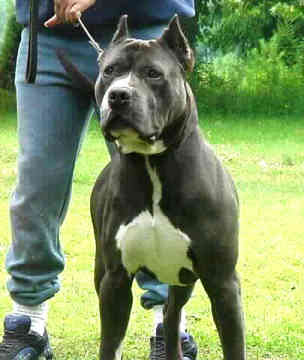
He added that if he did get such a dog, he would name it Cerberus.
(They do look as if they come from hell.)
I suggested he name it Fifi instead, and dress it up with pink bows and the like. And when it chomped other dogs in two, he could remonstrate with it in the same tone of voice female pet owners use with their pets. 'Oh, bad Fifi! Bad little Fifi," while giving it an affectionate caress.
The discussion prompted me to do a little research on the internet about fighting dogs. Bandogs are generally regarded as the ultimate fighting dogs, but there are a number of other breeds considered quite formidable, and each has its advocates. Many are named after the areas from which they originated, such as the Dogo Argentino:

The Presa Canario, from the Canary Islands:

The American Pit Bull Terrier:

Akita Inu:

Central Asian Ovcharka:

English Mastiff (don't worry, if this picture puts off-color thoughts into your head, you're not alone):

Neapolitan Mastiff:

Kangal:

Many of these dogs are related to mastiffs, and many are also thought to be descended from the Molossus, a now extinct breed used by the Romans as a war dog:

One of the big questions among owners of fighting dogs is whether any of these creatures can stand up to a wolf. Most think not. There is some evidence that dogs have occasionally bested wolves. But for the most part, wolves kill dogs, even the fighting breeds, because of their superior agility, longer teeth, and stronger bite. Wolves are less muscular overall than the strongest dog breeds, but they have stronger jaw muscles. Wolves generally kill dogs by chomping down on their skulls, which is instantly fatal.
This is not to say that the fighting dogs fear wolves. Many of these creatures were originally bred to guard flocks of sheep against wolves; some were bred as guard dogs. But the qualities required to be a good sheep dog, or guard dog, overlap with those required to be a fighting dog. All of these dogs were bred to be fearless and aggressive, even when confronted with superior firepower.
The problem is, people who want such a dog don't want a pet to lavish affection on. They want a dog to burnish their own macho self-images. And they train the dogs to be effective fighting machines, and, even worse, sometimes abuse them. Hence the killings by dogs.
You've probably heard it said that there's nothing wrong with pit bulls, the problem is with the owners. Yes and no. There are lovingly raised, safe pit bulls. But if you took the worst, most abusive pit bull owners and gave them Pomeranians instead, no humans would die.
It's a little like what the NRA says: guns don't kill people, people do. That is true. But it's also true that without guns most of those killers would be far less effective.
Michael Vick is widely regarded with abhorrence in this country, but in fact dog fighting has long been been a tradition in many, if not most, parts of the world. All those fighting dogs were bred for a purpose. (The American Pit Bull Terrier is in fact called that because of the frequency with which the breed was put in pits to either fight other dogs or enter rat-baiting contests, in which money was wagered on how long it would take a dog to kill all the rats.)
I certainly don't support dog fighting. But I can understand the my-dog-can-take-your-dog sort of pride some owners exhibit.
When I told him that half wolves were illegal, he said that he would just tell people it's a Husky.
When I asked him what a Bandog was, he explained that they were basically half pit bull, half mastiff, bred to be the world's best fighting dogs. The idea was to combine the ferocity of a pit bull with the size of a mastiff:

He added that if he did get such a dog, he would name it Cerberus.
(They do look as if they come from hell.)
I suggested he name it Fifi instead, and dress it up with pink bows and the like. And when it chomped other dogs in two, he could remonstrate with it in the same tone of voice female pet owners use with their pets. 'Oh, bad Fifi! Bad little Fifi," while giving it an affectionate caress.
The discussion prompted me to do a little research on the internet about fighting dogs. Bandogs are generally regarded as the ultimate fighting dogs, but there are a number of other breeds considered quite formidable, and each has its advocates. Many are named after the areas from which they originated, such as the Dogo Argentino:

The Presa Canario, from the Canary Islands:

The American Pit Bull Terrier:

Akita Inu:

Central Asian Ovcharka:

English Mastiff (don't worry, if this picture puts off-color thoughts into your head, you're not alone):

Neapolitan Mastiff:

Kangal:

Many of these dogs are related to mastiffs, and many are also thought to be descended from the Molossus, a now extinct breed used by the Romans as a war dog:

One of the big questions among owners of fighting dogs is whether any of these creatures can stand up to a wolf. Most think not. There is some evidence that dogs have occasionally bested wolves. But for the most part, wolves kill dogs, even the fighting breeds, because of their superior agility, longer teeth, and stronger bite. Wolves are less muscular overall than the strongest dog breeds, but they have stronger jaw muscles. Wolves generally kill dogs by chomping down on their skulls, which is instantly fatal.
This is not to say that the fighting dogs fear wolves. Many of these creatures were originally bred to guard flocks of sheep against wolves; some were bred as guard dogs. But the qualities required to be a good sheep dog, or guard dog, overlap with those required to be a fighting dog. All of these dogs were bred to be fearless and aggressive, even when confronted with superior firepower.
The problem is, people who want such a dog don't want a pet to lavish affection on. They want a dog to burnish their own macho self-images. And they train the dogs to be effective fighting machines, and, even worse, sometimes abuse them. Hence the killings by dogs.
You've probably heard it said that there's nothing wrong with pit bulls, the problem is with the owners. Yes and no. There are lovingly raised, safe pit bulls. But if you took the worst, most abusive pit bull owners and gave them Pomeranians instead, no humans would die.
It's a little like what the NRA says: guns don't kill people, people do. That is true. But it's also true that without guns most of those killers would be far less effective.
Michael Vick is widely regarded with abhorrence in this country, but in fact dog fighting has long been been a tradition in many, if not most, parts of the world. All those fighting dogs were bred for a purpose. (The American Pit Bull Terrier is in fact called that because of the frequency with which the breed was put in pits to either fight other dogs or enter rat-baiting contests, in which money was wagered on how long it would take a dog to kill all the rats.)
I certainly don't support dog fighting. But I can understand the my-dog-can-take-your-dog sort of pride some owners exhibit.
Saturday, August 3, 2013
Top-heavy non-athletes
In April of 2010 I wrote about the gay men who invaded the Cancun Club Med just as we were leaving. I noted at the time that a fair number of them seemed to be on steroids, but had disproportionately large torsos and well muscled arms placed atop scrawny legs.
The other day I was told to Google image, "Friends don't let friends skip leg day." It's full of pictures of guys who do a lot of work on their pectorals, abs, lats, deltoids, biceps, and triceps, but seem to totally neglect their legs. (I suspect that some of the pictures were Photoshopped, but in any case, the message is clear.)
Here's one of the pictures:

Having a buff torso but skinny legs is a dead giveaway that you were never an athlete. It also seems to be a fairly good indicator that you're gay. And it often means that you've juiced, but don't know how to work out.
I can think of almost no sport in which you can get away with having no base. Tommy Hearns, the welterweight boxing champion from the 1980's, had skinny legs, but he was freakishly tall for his weight class, and relied on his superior reach and punching speed. But even with those advantages, he was ultimately undone by the far more agile Sugar Ray Leonard, who played mongoose to Hearns' cobra.

But Hearns aside, I can think of very few athletes, even cross country runners, who get away with such thin legs.
I was reminded of all this because I saw a gay couple walking down the street today and one of them had those prototypical non-athlete gym rat proportions: muscular arms with legs of approximately the same circumference.
It's not a good look.
The goal should be to look balanced, like one of those Greek or Roman statues. If you do it right, you'll look as if you came by that look "honestly," through the practice of a sport, or as if you were lucky, and just hit the genetic lottery. If you do it wrong, as so many of these gay guys do, you end up looking like a silly -- and ignorant -- gym rat.
Note to bodybuilders: you're not Tommy Hearns. As long as you're doing all those bench presses and pull downs and sit-ups, it really wouldn't hurt to throw a few squats into your routine.
The other day I was told to Google image, "Friends don't let friends skip leg day." It's full of pictures of guys who do a lot of work on their pectorals, abs, lats, deltoids, biceps, and triceps, but seem to totally neglect their legs. (I suspect that some of the pictures were Photoshopped, but in any case, the message is clear.)
Here's one of the pictures:

Having a buff torso but skinny legs is a dead giveaway that you were never an athlete. It also seems to be a fairly good indicator that you're gay. And it often means that you've juiced, but don't know how to work out.
I can think of almost no sport in which you can get away with having no base. Tommy Hearns, the welterweight boxing champion from the 1980's, had skinny legs, but he was freakishly tall for his weight class, and relied on his superior reach and punching speed. But even with those advantages, he was ultimately undone by the far more agile Sugar Ray Leonard, who played mongoose to Hearns' cobra.

But Hearns aside, I can think of very few athletes, even cross country runners, who get away with such thin legs.
I was reminded of all this because I saw a gay couple walking down the street today and one of them had those prototypical non-athlete gym rat proportions: muscular arms with legs of approximately the same circumference.
It's not a good look.
The goal should be to look balanced, like one of those Greek or Roman statues. If you do it right, you'll look as if you came by that look "honestly," through the practice of a sport, or as if you were lucky, and just hit the genetic lottery. If you do it wrong, as so many of these gay guys do, you end up looking like a silly -- and ignorant -- gym rat.
Note to bodybuilders: you're not Tommy Hearns. As long as you're doing all those bench presses and pull downs and sit-ups, it really wouldn't hurt to throw a few squats into your routine.
Friday, August 2, 2013
Eulogy
I was at the bookstore trying to find a book for the plane flight home today when I stumbled across a great line, on the occasion of someone's death:
"Sure, it's sad and all, but it wasn't as if the alternative had been immortality."
"Sure, it's sad and all, but it wasn't as if the alternative had been immortality."
Sociopaths in their natural habitat
The other day a commenter on the post Sociopaths you meet rather than read about told the story of how he'd known a sociopath and a psychiatrist had met this sociopath and given him the benefit of the doubt:
I've even seen a psychiatrist say this about someone after I outed him as a sociopath (having lived with him for a month, the psych having only met him for an hour). She was all "him, a sociopath? I don't believe that. He might be a Borderline, but I doubt he's a sociopath". It's really discouraging when not even psychiatrists realise that sociopaths look like perfectly ordinary citizens....
The fact is, there are a lot of psychiatrists and psychologists who don't really understand sociopaths. Trying to learn about sociopaths in a clinical setting is a little like trying to learn about the hunting habits of the tiger by watching one in a zoo. A sociopath always knows why he is in that clinical setting, and therefore is on his guard and will not act like himself.
And psychologists are only human: they are as susceptible to manipulation as anyone else.
I've even seen a psychiatrist say this about someone after I outed him as a sociopath (having lived with him for a month, the psych having only met him for an hour). She was all "him, a sociopath? I don't believe that. He might be a Borderline, but I doubt he's a sociopath". It's really discouraging when not even psychiatrists realise that sociopaths look like perfectly ordinary citizens....
The fact is, there are a lot of psychiatrists and psychologists who don't really understand sociopaths. Trying to learn about sociopaths in a clinical setting is a little like trying to learn about the hunting habits of the tiger by watching one in a zoo. A sociopath always knows why he is in that clinical setting, and therefore is on his guard and will not act like himself.
And psychologists are only human: they are as susceptible to manipulation as anyone else.
I've known two sociopaths well. One was a quasi-girlfriend I had when I was 25, the other was a boss I had on Wall Street. I got to observe both over an extended period of time. I saw how they operated, how they lied, how they used people, how they saw themselves, how they never took blame, the types of excuses they used, how they never got nervous, how they never got embarrassed. I saw how destructive they were, and how they loved to facilitate others' failure whenever they thought they could get away with it.
I also saw how even people who had been exposed to them for a long time remained blind to their true natures (like me, at first, with that girlfriend). But it's one thing for a layperson to remain blind to sociopathy, it's another for someone who's a professional in the field.
While Bill Clinton was President, I asked two psychiatrists I knew if they thought he was a sociopath. Both were Democrats, and to their credit, both somewhat sheepishly admitted that he was. (Sheepishness is one quality sociopaths themselves never exhibit, and is often the hallmark of a decent person.)
But many psychology students, clinical therapists, and even psychiatrists are often surprisingly naive about sociopaths. Even when they understand the concept of sociopathy they will, as the commenter above noted, give them the benefit of the doubt when there really is no doubt. Sometimes they'll act as if a diagnosis of sociopathy is unwarranted for any behavior short of serial killing.
Sometimes they'll try to draw moral distinctions between the sociopaths they deem personally attractive and those they don't (i.e., that somehow the fat, ugly, self-righteous John Wayne Gacy was more loathsome than the handsome, charming Ted Bundy).
And sometimes they'll let their political attitudes influence their diagnoses. ("Bill Clinton? I don't think so....Newt Gingrich? Absolutely!!")
Sometimes they'll even let a brief personal contact influence their opinion ("He said he thinks I'm smart; he must be a nice guy. And he seems so.....ordinary.")
Sociopathy has nothing to do with attractiveness, or political bent, and probably has little to do with the little snapshot you got if you met them briefly.
To really understand sociopaths, you have to have observed them in their natural setting over an extended period of time. You have to become well versed in their typical subterfuges and patterns of behavior. And even then, you have to understand that you can't necessarily recognize them at first.
(People who do this kind of "field work" almost never do it on a voluntary basis.)
Don't ever think that just because someone is a psychologist or psychiatrist of one sort or another, he understands sociopaths. He has merely observed chimps in a zoo. Or even worse, has read about them in a book.
To really understand sociopaths, you have to be Jane Goodall.
I also saw how even people who had been exposed to them for a long time remained blind to their true natures (like me, at first, with that girlfriend). But it's one thing for a layperson to remain blind to sociopathy, it's another for someone who's a professional in the field.
While Bill Clinton was President, I asked two psychiatrists I knew if they thought he was a sociopath. Both were Democrats, and to their credit, both somewhat sheepishly admitted that he was. (Sheepishness is one quality sociopaths themselves never exhibit, and is often the hallmark of a decent person.)
But many psychology students, clinical therapists, and even psychiatrists are often surprisingly naive about sociopaths. Even when they understand the concept of sociopathy they will, as the commenter above noted, give them the benefit of the doubt when there really is no doubt. Sometimes they'll act as if a diagnosis of sociopathy is unwarranted for any behavior short of serial killing.
Sometimes they'll try to draw moral distinctions between the sociopaths they deem personally attractive and those they don't (i.e., that somehow the fat, ugly, self-righteous John Wayne Gacy was more loathsome than the handsome, charming Ted Bundy).
And sometimes they'll let their political attitudes influence their diagnoses. ("Bill Clinton? I don't think so....Newt Gingrich? Absolutely!!")
Sometimes they'll even let a brief personal contact influence their opinion ("He said he thinks I'm smart; he must be a nice guy. And he seems so.....ordinary.")
Sociopathy has nothing to do with attractiveness, or political bent, and probably has little to do with the little snapshot you got if you met them briefly.
To really understand sociopaths, you have to have observed them in their natural setting over an extended period of time. You have to become well versed in their typical subterfuges and patterns of behavior. And even then, you have to understand that you can't necessarily recognize them at first.
(People who do this kind of "field work" almost never do it on a voluntary basis.)
Don't ever think that just because someone is a psychologist or psychiatrist of one sort or another, he understands sociopaths. He has merely observed chimps in a zoo. Or even worse, has read about them in a book.
To really understand sociopaths, you have to be Jane Goodall.
Thursday, August 1, 2013
Westminster Abbey
Westminster Abbey has more history crammed into a relatively small space than any other place I can think of.
The Abbey has been the site of countless coronations and weddings, and doubles as a graveyard for the great and the mighty (the two don't necessarily overlap). The bodies of Isaac Newton and Charles Darwin and the original Queen Elizabeth I and Mary Queen of Scots and Edward I (Edward Longshanks of Braveheart fame) and a host of other luminaries lie there.
Both Elizabeth and Mary have their carved likenesses on top of their coffins, which lay above ground. This allows you to see what they looked like when alive. (I sorta wish this custom had continued.)
There are also a number of people who weren't truly great, but merely prominent religious and political figures from eras past. Churchill and Disraeli are commemorated there, but so are a host of other politicians you've never heard of, including many who were undoubtedly the Harry Reid's and Nancy Pelosi's of their day.
But the fact that Charles Dickens and Rudyard Kipling and Alfred Lord Tennyson and George Frederic Handel and David Livingstone are buried there leaves you with an overwhelming feeling of being in the presence of greatness, even if their bones have long since turned to dust.
There are also memorials to people not buried there, like Jane Austen and William Shakespeare and Anthony Trollope. It's almost as if England tried to compress all of its glory into one cathedral.
(It's hard not to wonder which recent figures will eventually be immortalized there. Will John Lennon and Paul McCartney make it? Christopher Hitchens? Andrew Lloyd Webber?)
Many of the bodies buried there lie right beneath the floor, and it's hard to avoid walking on their tombs. Darwin's grave, for instance, is stepped on by thousands of people every day. It feels a little disrespectful, but it's pretty much unavoidable. (At least no one pisses on his grave.)
The only grave one is not allowed to step on is that of the Unknown Warrior, an anonymous soldier from WWI whose body lies beneath it, surrounded by poppies. While the rest of the markers leave you feeling awed, this one leaves you sad, at the thought of this young man and all the others like him who gave their lives so nobly, and so wastefully, in their youth.
It's worth taking the official tour. The guide will point out things that you'd never notice on your own. For instance, that Sir Robert Peel organized the nation's police force, and this is why British policemen are called "Bobbies." Or that Lewis Carroll's memorial in Poet's Corner is circular so as to symbolize the hole into which Alice fell in Through the Looking Glass.
Our guide was an older, somewhat fastidious fellow who always asked if we had any questions, but tended to answer them somewhat impatiently. At one point he pointed out that William the Conqueror, otherwise known as William I, who was crowned in 1066, was the last king to be given a title with a descriptive name (like Edward the Confessor, or Ethelred the Unready). After that, they were merely given numbers (like Richard III). I tried to trip him up by asking when Richard the Lionheart reigned (I thought it was after 1066, and sure enough, it turned out to be in the late twelfth century). Our tour guide huffed that that was more of a nickname, not an official title.
But at least he spoke with an English accent. Given today's London, we should have counted ourselves lucky that he didn't speak in an Indian, or Russian, accent.
The Abbey has been the site of countless coronations and weddings, and doubles as a graveyard for the great and the mighty (the two don't necessarily overlap). The bodies of Isaac Newton and Charles Darwin and the original Queen Elizabeth I and Mary Queen of Scots and Edward I (Edward Longshanks of Braveheart fame) and a host of other luminaries lie there.
Both Elizabeth and Mary have their carved likenesses on top of their coffins, which lay above ground. This allows you to see what they looked like when alive. (I sorta wish this custom had continued.)
There are also a number of people who weren't truly great, but merely prominent religious and political figures from eras past. Churchill and Disraeli are commemorated there, but so are a host of other politicians you've never heard of, including many who were undoubtedly the Harry Reid's and Nancy Pelosi's of their day.
But the fact that Charles Dickens and Rudyard Kipling and Alfred Lord Tennyson and George Frederic Handel and David Livingstone are buried there leaves you with an overwhelming feeling of being in the presence of greatness, even if their bones have long since turned to dust.
There are also memorials to people not buried there, like Jane Austen and William Shakespeare and Anthony Trollope. It's almost as if England tried to compress all of its glory into one cathedral.
(It's hard not to wonder which recent figures will eventually be immortalized there. Will John Lennon and Paul McCartney make it? Christopher Hitchens? Andrew Lloyd Webber?)
Many of the bodies buried there lie right beneath the floor, and it's hard to avoid walking on their tombs. Darwin's grave, for instance, is stepped on by thousands of people every day. It feels a little disrespectful, but it's pretty much unavoidable. (At least no one pisses on his grave.)
The only grave one is not allowed to step on is that of the Unknown Warrior, an anonymous soldier from WWI whose body lies beneath it, surrounded by poppies. While the rest of the markers leave you feeling awed, this one leaves you sad, at the thought of this young man and all the others like him who gave their lives so nobly, and so wastefully, in their youth.
It's worth taking the official tour. The guide will point out things that you'd never notice on your own. For instance, that Sir Robert Peel organized the nation's police force, and this is why British policemen are called "Bobbies." Or that Lewis Carroll's memorial in Poet's Corner is circular so as to symbolize the hole into which Alice fell in Through the Looking Glass.
Our guide was an older, somewhat fastidious fellow who always asked if we had any questions, but tended to answer them somewhat impatiently. At one point he pointed out that William the Conqueror, otherwise known as William I, who was crowned in 1066, was the last king to be given a title with a descriptive name (like Edward the Confessor, or Ethelred the Unready). After that, they were merely given numbers (like Richard III). I tried to trip him up by asking when Richard the Lionheart reigned (I thought it was after 1066, and sure enough, it turned out to be in the late twelfth century). Our tour guide huffed that that was more of a nickname, not an official title.
But at least he spoke with an English accent. Given today's London, we should have counted ourselves lucky that he didn't speak in an Indian, or Russian, accent.
Monday, July 29, 2013
Reaction to surprises in one's ethnicity
Eight posts ago I reported my results from Ancestry.com. The biggest surprise was the 8% Finnish/Volga-Ural ethnicity.
In the earlier post, I mostly made jokes about the 8% "uncertain" part of the results. But on a more serious note: do people, when they see their results, identify more with whatever they find out they are? Do other people's allegiances undergo a subtle shift based on the results of their DNA test?
As I Google-Imaged "Finnish people" after seeing my results, did I feel a faint tug, a sense that these are my people? Not really. It was more just a feeling of mild curiosity. Will I now think of runner Paavo Nurmi, the "Flying Finn," or sniper Simo Hayha, the "White Death," with a small sense of pride? Probably not. But, after all, I'm only 8% Finnish. What if I had turned out to be 50% Finnish? My guess is that I probably would feel more of a sense of identification.
I have yet to meet the person of Irish descent, for instance, who does not make a fairly big deal out of the fact that he is Irish. What if someone who'd been adopted were to find out that he was 100% Irish? (Ancestry.com does not distinguish between the British isles, but for argument's sake, let's say they did.) Would that person then become a semi-professional Irishman like so many others? Would he, mid-life, all of a sudden be tempted to say self-deprecating things like, "It's hard to get anything into my thick Irish skull?" Or "Hey, I can't help it, I'm Irish, I like to drink?"
Or what if someone who had been adopted were to find out that he's 100% Jewish? Would his stance toward Israel become more charitable? Would he be tempted to learn about the religion, and possibly go through some of the rituals (short of a bris)?
After all, our ancestral DNA is who we are, at the most basic level. It's who we tend to identify with, who we root for, and who we side with. It's not coincidence that both Jesse Jackson (in '84 and '88) and Barack Obama (in '08 and '12) got upwards of 98% of the black vote in the primaries.
I recently asked a conservative young white man -- let's call him William -- what he would do if he found out he was part black. He immediately replied, "I'd become a black nationalist."
I asked, would you change your name? He said, "Nah, not really. Well, maybe a little. I'd probably just call myself Billy X."
In the earlier post, I mostly made jokes about the 8% "uncertain" part of the results. But on a more serious note: do people, when they see their results, identify more with whatever they find out they are? Do other people's allegiances undergo a subtle shift based on the results of their DNA test?
As I Google-Imaged "Finnish people" after seeing my results, did I feel a faint tug, a sense that these are my people? Not really. It was more just a feeling of mild curiosity. Will I now think of runner Paavo Nurmi, the "Flying Finn," or sniper Simo Hayha, the "White Death," with a small sense of pride? Probably not. But, after all, I'm only 8% Finnish. What if I had turned out to be 50% Finnish? My guess is that I probably would feel more of a sense of identification.
I have yet to meet the person of Irish descent, for instance, who does not make a fairly big deal out of the fact that he is Irish. What if someone who'd been adopted were to find out that he was 100% Irish? (Ancestry.com does not distinguish between the British isles, but for argument's sake, let's say they did.) Would that person then become a semi-professional Irishman like so many others? Would he, mid-life, all of a sudden be tempted to say self-deprecating things like, "It's hard to get anything into my thick Irish skull?" Or "Hey, I can't help it, I'm Irish, I like to drink?"
Or what if someone who had been adopted were to find out that he's 100% Jewish? Would his stance toward Israel become more charitable? Would he be tempted to learn about the religion, and possibly go through some of the rituals (short of a bris)?
After all, our ancestral DNA is who we are, at the most basic level. It's who we tend to identify with, who we root for, and who we side with. It's not coincidence that both Jesse Jackson (in '84 and '88) and Barack Obama (in '08 and '12) got upwards of 98% of the black vote in the primaries.
I recently asked a conservative young white man -- let's call him William -- what he would do if he found out he was part black. He immediately replied, "I'd become a black nationalist."
I asked, would you change your name? He said, "Nah, not really. Well, maybe a little. I'd probably just call myself Billy X."
Saturday, July 27, 2013
London
I'm in London to bet on the world swimming championships, which are taking place in Barcelona this coming week. Unfortunately, the bookmakers are only willing to take very small bets. (Had I known this ahead of time, I wouldn't have come.) When I complained, they told me I was the only one making bets, which made them leery.
Swimming must be such a wholesome activity that its participants and fans are simply averse by nature to an unwholesome activity like gambling.
The betting shops themselves are depressing places, full of broken down old men who obviously have nothing else going on in their lives.
Well, at least I fit in.
London seems even more diverse than the last time I was here, in 2004. So far I have heard Greek, Bulgarian, Russian, French, Chinese, Polish, and Jamaican accents. And fewer British accents.
It's a little weird to hear black people speak with British accents. I know, there shouldn't be anything weird about that, they are British, but somehow, there is. (When they travel stateside, do their brethren think they're putting on airs?)
Everyone I've spoken to, whatever their accent or race, has been very polite and helpful. To that extent, I suppose, they've all been Anglicized.
It's not hard to spot the American tourists. They wear shorts and running shoes and t-shirts with various logos, an outfit most Europeans wouldn't be caught dead in.
One thing Europeans will be caught dead doing, though, is smoking. The Brits don't light up quite as much as the French, but you can never walk far in London without smelling cigarette smoke.
Speaking of which, even though it's a cliche, some Brits really do look as though they just smelled something bad. It's sort of an effete, I'm-so-refined-I-find-everything-distasteful sort of look. (It's subtle, though, and Americans who try to imitate it, like Robert Downey doing Sherlock Holmes, always end up overdoing it.) There's a variant on this expression, the I'm-terribly-afraid-to-inform-you-but-I've-just-cut-one look. It's also vaguely effete, but with a different, less narcissistic flavor. You can almost tell just from their faces that the latter type are always painstakingly polite and take great care to point out that everything that goes wrong is completely their fault.
(I find these people a natural fit for me, since I'm the type who refuses to take blame for anything.)
I only notice these things because I stare at people. People around here seem to consider that bad form, but, hey, I'm an American: I'm supposed to be rude.
I've gotten the hang of their subway system, which they refer to as the Tube, or the Underground. At first it seemed expensive, but then I realized that the ticket I bought for roughly eleven dollars would take me anywhere for the entire day. Another nice thing about the Tube is that unlike the New York subway system, it doesn't smell like stale urine. (New Yorkers are really the ones who should walk around looking as if they just smelled something bad.)
One nice thing about England is that you see fewer chain stores. America has become the land of monopolies: few local bookstores survived the onslaught of Barnes & Noble, and now B&N is struggling to survive the onslaught of Amazon. And so it went for many types of businesses. In London, it seems the vast majority of street-level stores are unique.
England's largest unique store is Harrod's, which I wandered through today. Five minutes was enough to convince me that everything there is overpriced by a multiple of about four. Evidently, you have to pay up for their name. The store was full of Japanese tourists carrying shopping bags. (I don't think there is a Japanese translation for the word "sale.")
Anyway, I've got another eight days of doing my bit to burnish the ugly American image, staring at people and complaining to the betting parlors that they won't take large enough bets. Hmm....maybe I should go back to Harrod's and inform the sale clerks that their prices are too high.
Swimming must be such a wholesome activity that its participants and fans are simply averse by nature to an unwholesome activity like gambling.
The betting shops themselves are depressing places, full of broken down old men who obviously have nothing else going on in their lives.
Well, at least I fit in.
London seems even more diverse than the last time I was here, in 2004. So far I have heard Greek, Bulgarian, Russian, French, Chinese, Polish, and Jamaican accents. And fewer British accents.
It's a little weird to hear black people speak with British accents. I know, there shouldn't be anything weird about that, they are British, but somehow, there is. (When they travel stateside, do their brethren think they're putting on airs?)
Everyone I've spoken to, whatever their accent or race, has been very polite and helpful. To that extent, I suppose, they've all been Anglicized.
It's not hard to spot the American tourists. They wear shorts and running shoes and t-shirts with various logos, an outfit most Europeans wouldn't be caught dead in.
One thing Europeans will be caught dead doing, though, is smoking. The Brits don't light up quite as much as the French, but you can never walk far in London without smelling cigarette smoke.
Speaking of which, even though it's a cliche, some Brits really do look as though they just smelled something bad. It's sort of an effete, I'm-so-refined-I-find-everything-distasteful sort of look. (It's subtle, though, and Americans who try to imitate it, like Robert Downey doing Sherlock Holmes, always end up overdoing it.) There's a variant on this expression, the I'm-terribly-afraid-to-inform-you-but-I've-just-cut-one look. It's also vaguely effete, but with a different, less narcissistic flavor. You can almost tell just from their faces that the latter type are always painstakingly polite and take great care to point out that everything that goes wrong is completely their fault.
(I find these people a natural fit for me, since I'm the type who refuses to take blame for anything.)
I only notice these things because I stare at people. People around here seem to consider that bad form, but, hey, I'm an American: I'm supposed to be rude.
I've gotten the hang of their subway system, which they refer to as the Tube, or the Underground. At first it seemed expensive, but then I realized that the ticket I bought for roughly eleven dollars would take me anywhere for the entire day. Another nice thing about the Tube is that unlike the New York subway system, it doesn't smell like stale urine. (New Yorkers are really the ones who should walk around looking as if they just smelled something bad.)
One nice thing about England is that you see fewer chain stores. America has become the land of monopolies: few local bookstores survived the onslaught of Barnes & Noble, and now B&N is struggling to survive the onslaught of Amazon. And so it went for many types of businesses. In London, it seems the vast majority of street-level stores are unique.
England's largest unique store is Harrod's, which I wandered through today. Five minutes was enough to convince me that everything there is overpriced by a multiple of about four. Evidently, you have to pay up for their name. The store was full of Japanese tourists carrying shopping bags. (I don't think there is a Japanese translation for the word "sale.")
Anyway, I've got another eight days of doing my bit to burnish the ugly American image, staring at people and complaining to the betting parlors that they won't take large enough bets. Hmm....maybe I should go back to Harrod's and inform the sale clerks that their prices are too high.
Tuesday, July 23, 2013
Out of character
In the previous post I mentioned how Dennis Farina couldn't possibly have been as nasty as his usual movie persona, otherwise he wouldn't have gotten so many roles.
The best example I've ever seen of this dichotomy is probably Ving Rhames. Rhames almost always plays a prototypical black badass; perhaps his best known role was Marcellus Wallace, in Pulp Fiction.
Rhames got a Golden Globe in 1998 for Best Actor in a Television Production for his portrayal of Don King. He got up on stage, started crying, and asked Jack Lemmon -- another nominee -- to come up on stage so he could in turn give the award to him, as the man who really deserved it. It was the most un-Ving Rhames like performance you could possibly have imagined. Marcellus, to be honest, would certainly have been embarrassed.
But it explains why Rhames has gotten so many roles -- he's likable.
The best example I've ever seen of this dichotomy is probably Ving Rhames. Rhames almost always plays a prototypical black badass; perhaps his best known role was Marcellus Wallace, in Pulp Fiction.
Rhames got a Golden Globe in 1998 for Best Actor in a Television Production for his portrayal of Don King. He got up on stage, started crying, and asked Jack Lemmon -- another nominee -- to come up on stage so he could in turn give the award to him, as the man who really deserved it. It was the most un-Ving Rhames like performance you could possibly have imagined. Marcellus, to be honest, would certainly have been embarrassed.
But it explains why Rhames has gotten so many roles -- he's likable.
Dennis Farina, RIP
Dennis Farina died yesterday. He acted in four of the most enjoyable movies of all time: Midnight Run, Snatch, Get Shorty, and Out of Sight.
Farina excelled at embodying gleeful nastiness, exuberant sadism, and petty vanity. He could make a certain brand of bumbling nastiness humorous, and almost appealing.
Farina was a good enough actor that he made you believe that he was probably pretty mean himself. Before he went to Hollywood, he was a detective with the Chicago Police Department, until he was 41. (It seems a fairly safe bet which role Farina got had he and his partner ever engaged in the good cop-bad cop routine.)
But he couldn't have been truly nasty himself, otherwise he wouldn't have gotten so many roles. (It's vital for an actor to be popular with his coworkers; any actor who develops a reputation for being difficult will soon find himself out of work.)
Farina wasn't a great actor; he didn't have enough range to be considered that. His roles varied from street smart and skeptical to brutish and comically vain, but he always played some variant of tough.
But he also wasn't a vain actor. He didn't mind playing ugly, or stupid, or evil, or the hapless comic foil to someone like John Travolta. In fact, he seemed to relish playing those roles, which is what made him enjoyable to watch.
Check out these clips:
Here's Farina as the intimidating, bullying mob boss Jimmy Serrano in Midnight Run.
Here he is as Ray Barboni, the brutal, no nonsense, vain mobster in Get Shorty.
And here he is as Abraham Denovitz, the crooked diamond dealer in Snatch.
It wasn't coincidence that Farina ended up in such enjoyable films; he was a big part of what made them enjoyable.
Farina excelled at embodying gleeful nastiness, exuberant sadism, and petty vanity. He could make a certain brand of bumbling nastiness humorous, and almost appealing.
Farina was a good enough actor that he made you believe that he was probably pretty mean himself. Before he went to Hollywood, he was a detective with the Chicago Police Department, until he was 41. (It seems a fairly safe bet which role Farina got had he and his partner ever engaged in the good cop-bad cop routine.)
But he couldn't have been truly nasty himself, otherwise he wouldn't have gotten so many roles. (It's vital for an actor to be popular with his coworkers; any actor who develops a reputation for being difficult will soon find himself out of work.)
Farina wasn't a great actor; he didn't have enough range to be considered that. His roles varied from street smart and skeptical to brutish and comically vain, but he always played some variant of tough.
But he also wasn't a vain actor. He didn't mind playing ugly, or stupid, or evil, or the hapless comic foil to someone like John Travolta. In fact, he seemed to relish playing those roles, which is what made him enjoyable to watch.
Check out these clips:
Here's Farina as the intimidating, bullying mob boss Jimmy Serrano in Midnight Run.
Here he is as Ray Barboni, the brutal, no nonsense, vain mobster in Get Shorty.
And here he is as Abraham Denovitz, the crooked diamond dealer in Snatch.
It wasn't coincidence that Farina ended up in such enjoyable films; he was a big part of what made them enjoyable.
Sunday, July 21, 2013
Christine Granville
Today's NY Times had a fascinating review of a book about a heroic WWII-era British spy who was quite likely a sociopath. (Italics mine):
Through Enemy Lines
‘The Spy Who Loved,’ by Clare Mulley
By Ben MacIntyre
Christine Granville was one of the bravest, toughest and strangest secret agents of World War II. Her feats of derring-do included acting as a courier in Nazi-occupied Europe, parachuting into France in support of the Allied invasion and rescuing three of her comrades from certain execution. She was said to be Winston Churchill’s favorite spy — a considerable accolade given how much Britain’s wartime prime minister liked spies. She may have been the model for Vesper Lynd, the female agent in Ian Fleming’s first James Bond novel, “Casino Royale.” She won medals for bravery from both Britain and France. Men found her irresistible, and she did very little to resist them.

Keystone/Getty Images
Christine Granville, circa 1950.
Yet this woman, so ripe for Hollywood hagiography, is almost unknown today. Her obscurity is the consequence of her gender (spy history is notoriously sexist)...
Through Enemy Lines
‘The Spy Who Loved,’ by Clare Mulley
By Ben MacIntyre
Christine Granville was one of the bravest, toughest and strangest secret agents of World War II. Her feats of derring-do included acting as a courier in Nazi-occupied Europe, parachuting into France in support of the Allied invasion and rescuing three of her comrades from certain execution. She was said to be Winston Churchill’s favorite spy — a considerable accolade given how much Britain’s wartime prime minister liked spies. She may have been the model for Vesper Lynd, the female agent in Ian Fleming’s first James Bond novel, “Casino Royale.” She won medals for bravery from both Britain and France. Men found her irresistible, and she did very little to resist them.
Vesper Lynd -- wow! And "The Spy Who Loved" -- get it? One of Ian Fleming's other Bond novels was titled, "The Spy Who Loved Me."
Keystone/Getty Images
Christine Granville, circa 1950.
Yet this woman, so ripe for Hollywood hagiography, is almost unknown today. Her obscurity is the consequence of her gender (spy history is notoriously sexist)...
That's why you've never heard of Mata Hari -- or Vesper Lynd. (The NY Times just has to stick in its politically correct interpretation of practically everything, it just can't help itself.)
...her nationality (she was Polish, and Communist Poland did not encourage praise of British spies)...
Wouldn't it have been Britain which praised her?
...and above all her character. She was a complex and mysterious individual.
"Complex and mysterious" usually = "difficult," and difficult sometimes = sociopath.
She survived the war only to be murdered by an obsessed former lover in the lobby of a London hotel. As Clare Mulley reveals in her admirable and overdue biography, “The Spy Who Loved,” Granville was not a straightforward personality, and all the more fascinating for that.
Born Maria Krystyna Janina Skarbek, the daughter of a feckless Polish aristocrat and a wealthy Jewish heiress, she enjoyed a comfortable, uneventful and spoiled upbringing. Indeed, her main achievement before the war was to be a runner-up in the 1930 Miss Poland beauty contest. War changed her utterly.
She was in South Africa, the wife of a Polish diplomat, when the Germans invaded Poland in September 1939. She immediately headed for London, presented herself to the British secret service and offered to ski over the Carpathian Mountains into Poland in order to take British propaganda into Nazi-occupied Warsaw. “She is absolutely fearless,” a secret service report noted, a “flaming Polish patriot, . . . expert skier and great adventuress.”
Born Maria Krystyna Janina Skarbek, the daughter of a feckless Polish aristocrat and a wealthy Jewish heiress, she enjoyed a comfortable, uneventful and spoiled upbringing. Indeed, her main achievement before the war was to be a runner-up in the 1930 Miss Poland beauty contest. War changed her utterly.
She was in South Africa, the wife of a Polish diplomat, when the Germans invaded Poland in September 1939. She immediately headed for London, presented herself to the British secret service and offered to ski over the Carpathian Mountains into Poland in order to take British propaganda into Nazi-occupied Warsaw. “She is absolutely fearless,” a secret service report noted, a “flaming Polish patriot, . . . expert skier and great adventuress.”
"Absolutely fearless" and "great adventuress" often = sociopath as well. And whatever happened to that husband?
She was duly recruited into Section D, which would evolve into the fabled Special Operations Executive (S.O.E.), the sabotage, subversion and espionage unit established by Churchill to operate behind enemy lines and “set Europe ablaze.” She adopted the name Christine Granville, received a British passport and shaved several years off her real age on official forms — self-reinvention was part of her makeup, as it is of many spies. The British gave her the code name “Willing,” an apt reflection of her attitude toward sex as well as her readiness to embrace extreme peril.
She was duly recruited into Section D, which would evolve into the fabled Special Operations Executive (S.O.E.), the sabotage, subversion and espionage unit established by Churchill to operate behind enemy lines and “set Europe ablaze.” She adopted the name Christine Granville, received a British passport and shaved several years off her real age on official forms — self-reinvention was part of her makeup, as it is of many spies. The British gave her the code name “Willing,” an apt reflection of her attitude toward sex as well as her readiness to embrace extreme peril.
Self-reinvention is part of the makeup of sociopaths, and a wanton attitude toward sex is often a result of a sociopath's lack of inhibitions and impulsive nature.
Deployed to Hungary, Granville spent the first part of her war ferrying messages and people in and out of Poland. She crossed the mountains between Hungary and Poland no fewer than six times, bringing out Polish resisters and soldiers who would go on to fight for the Allied cause. She was usually accompanied by Andrzej Kowerski, a one-legged Polish patriot who would become her most enduring (and long-suffering) lover.
The stories of her exceptional sang-froid come thick and fast: skiing past the corpses of refugees frozen to death in the mountains, bribing guards, dodging bullets from a Luftwaffe plane on an open hillside and escaping from the Gestapo by biting her own tongue, spitting blood, and thus convincing her captors that she was ill with tuberculosis.
Deployed to Hungary, Granville spent the first part of her war ferrying messages and people in and out of Poland. She crossed the mountains between Hungary and Poland no fewer than six times, bringing out Polish resisters and soldiers who would go on to fight for the Allied cause. She was usually accompanied by Andrzej Kowerski, a one-legged Polish patriot who would become her most enduring (and long-suffering) lover.
The stories of her exceptional sang-froid come thick and fast: skiing past the corpses of refugees frozen to death in the mountains, bribing guards, dodging bullets from a Luftwaffe plane on an open hillside and escaping from the Gestapo by biting her own tongue, spitting blood, and thus convincing her captors that she was ill with tuberculosis.
If these stories are true, there is much to admire about Granville; yet "exceptional sang-froid" is something sociopaths specialize in, and the ability to ad lib under pressure is another thing they excel at.
According to one account, she could even charm her way around animals: when a “vicious Alsatian dog, trained to bite and break necks,” found her hiding under a bush with some partisans, she placed her arm around it, and “it lay down beside her, ignoring its handler’s whistles.” Such tales, as Mulley observes, are “the stuff of legend,” and she is too good a historian to take them entirely at face value. Granville was an expert at her own mythologizing, telling her stories of pacifying enemy dogs “right and left, to whoever was willing to listen.”
According to one account, she could even charm her way around animals: when a “vicious Alsatian dog, trained to bite and break necks,” found her hiding under a bush with some partisans, she placed her arm around it, and “it lay down beside her, ignoring its handler’s whistles.” Such tales, as Mulley observes, are “the stuff of legend,” and she is too good a historian to take them entirely at face value. Granville was an expert at her own mythologizing, telling her stories of pacifying enemy dogs “right and left, to whoever was willing to listen.”
No one is more of an expert in their "own mythologizing" than a sociopath. Especially when it's only a myth.
Along the way, she picked up lovers at astonishing speed, and dropped them just as fast. Sometimes, they took rejection badly. One hilarious British intelligence report describes how Granville’s “attractiveness appeared to be causing some difficulty in Budapest.” One spurned lover had gone to her flat and threatened to shoot himself “in his genital organs.” He missed, and shot himself in the foot.
Granville was “politically naïve”: “An opportunist, keen on action, who fell in with whichever personal contact would give her an assignment to work for the freedom of her country.” Her patriotism was whole-souled, ferocious and probably the only uncomplicated thing about her.
Along the way, she picked up lovers at astonishing speed, and dropped them just as fast. Sometimes, they took rejection badly. One hilarious British intelligence report describes how Granville’s “attractiveness appeared to be causing some difficulty in Budapest.” One spurned lover had gone to her flat and threatened to shoot himself “in his genital organs.” He missed, and shot himself in the foot.
Granville was “politically naïve”: “An opportunist, keen on action, who fell in with whichever personal contact would give her an assignment to work for the freedom of her country.” Her patriotism was whole-souled, ferocious and probably the only uncomplicated thing about her.
"Opportunist" is a yellow flag for sociopathy.
In 1944, she was parachuted into southern France to aid Francis Cammaerts, the celebrated (and married) S.O.E. agent who became, inevitably, her lover. She carried vital messages and matériel between resistance groups; she addressed Polish conscripts in the German Army, urging them to change sides; she carried a razor-sharp commando knife and a cyanide tablet sewn into the hem of her skirt.
In 1944, she was parachuted into southern France to aid Francis Cammaerts, the celebrated (and married) S.O.E. agent who became, inevitably, her lover. She carried vital messages and matériel between resistance groups; she addressed Polish conscripts in the German Army, urging them to change sides; she carried a razor-sharp commando knife and a cyanide tablet sewn into the hem of her skirt.
It takes a certain physical courage to be a paratrooper, and a certain cavalier disregard for one's own well-being to be in a position to have to carry around a cyanide tablet. These are both hallmarks of sociopathy.
Her crowning achievement was to spring Cammaerts and two other captured agents from the Gestapo jail where they were awaiting execution. She bribed her way into the prison, claiming to be General Montgomery’s niece, and informed the French collaborator in command that if the executions went ahead, he would face swift and lethal reprisal from the advancing Allies. The Frenchman saw the force of this argument, and escaped along with his prisoners.
Her crowning achievement was to spring Cammaerts and two other captured agents from the Gestapo jail where they were awaiting execution. She bribed her way into the prison, claiming to be General Montgomery’s niece, and informed the French collaborator in command that if the executions went ahead, he would face swift and lethal reprisal from the advancing Allies. The Frenchman saw the force of this argument, and escaped along with his prisoners.
Sociopaths are nothing if not skillfully manipulative.
Granville’s postwar life was as grim and bleak as her war had been vivid and exhilarating. Dismissed from S.O.E., she was, like so many other exiled Poles, unable to return to a homeland now under Communist rule. She found work as a telephone operator, a sales assistant and finally a stewardess on a shipping line.
Granville’s postwar life was as grim and bleak as her war had been vivid and exhilarating. Dismissed from S.O.E., she was, like so many other exiled Poles, unable to return to a homeland now under Communist rule. She found work as a telephone operator, a sales assistant and finally a stewardess on a shipping line.
Sales assistant? Telephone operator? After having basically been Mata Hari/Vesper Lynd? What a comedown that must have been. And how contemptuous must she have been of the people she worked with, and for?
Britain’s failure to support a woman who had risked her life so many times was shameful, but in truth Granville was fickle, demanding and virtually unemployable, at least in the way she wanted to be employed. She did not want to be a typist, a wife or a mother; she wanted to be a spy.
"Fickle, demanding and virtually unemployable" are code words for narcissism, a key part of every sociopath's makeup.
Mulley — the author of “The Woman Who Saved the Children: A Biography of Eglantyne Jebb, Founder of Save the Children” — makes excellent use of newly released archive material, the voluminous secondary sources and interviews with former colleagues, friends and lovers. But there is an unavoidable gap at the heart of this book, and that is the missing voice of Christine Granville herself. Only 11 of her letters seem to have survived. She never wrote an account of her exploits or described her own feelings. On the rare occasions that we do hear her voice, it is in fractured English that comes as a jolt: “Tell them that I am honest and clean Polish girl. . . . I like to jump out of a plane even every day.”
Mulley — the author of “The Woman Who Saved the Children: A Biography of Eglantyne Jebb, Founder of Save the Children” — makes excellent use of newly released archive material, the voluminous secondary sources and interviews with former colleagues, friends and lovers. But there is an unavoidable gap at the heart of this book, and that is the missing voice of Christine Granville herself. Only 11 of her letters seem to have survived. She never wrote an account of her exploits or described her own feelings. On the rare occasions that we do hear her voice, it is in fractured English that comes as a jolt: “Tell them that I am honest and clean Polish girl. . . . I like to jump out of a plane even every day.”
Who ever bothers to point out that they are "honest and clean" unless they are dishonest and unclean?
Granville’s story is told, inevitably, through the eyes of others, principally men, who tended to project onto her the fantasy of what they wanted to see. Of no man is this truer than the one who killed her: Dennis Muldowney, an unstable and infatuated ship’s steward unable to cope with Granville’s rejection after a brief affair. Muldowney stalked her, and then stabbed her in the heart in June 1952. He was condemned to death, and went to the gallows proclaiming he was “still very much in love” with the unsung heroine he had killed.
As I said above, there is much to admire Granville for. If she did even a fraction of the things attributed to her, she is an amazing person, and both a British and Polish national heroine as well. But throughout the review, I couldn't help but hear the not-so-faint echo of sociopathy reverberate in the descriptions of her temperament and actions and thirst for thrills. The most successful spies, like the most successful con men, are often sociopaths, for good reason.
Granville’s story is told, inevitably, through the eyes of others, principally men, who tended to project onto her the fantasy of what they wanted to see. Of no man is this truer than the one who killed her: Dennis Muldowney, an unstable and infatuated ship’s steward unable to cope with Granville’s rejection after a brief affair. Muldowney stalked her, and then stabbed her in the heart in June 1952. He was condemned to death, and went to the gallows proclaiming he was “still very much in love” with the unsung heroine he had killed.
As I said above, there is much to admire Granville for. If she did even a fraction of the things attributed to her, she is an amazing person, and both a British and Polish national heroine as well. But throughout the review, I couldn't help but hear the not-so-faint echo of sociopathy reverberate in the descriptions of her temperament and actions and thirst for thrills. The most successful spies, like the most successful con men, are often sociopaths, for good reason.
Granville is living proof that in wartime, you want the sociopaths to be on your side. And that there's really no time you want them on the opposing side.
Thursday, July 18, 2013
My Ancestry.com results
I got my Ancestry.com results yesterday, and, as I had suspected, I am not quite as advertised.
I am:
49% East Asian
22% British Isles
13% Central European
8% Finnish/Volga-Ural
8% uncertain
So, it looks as though my mother is a touch less than pure Japanese. As a good Japanese (from Japan) she should have been dismayed by this information, but when I conveyed it to her last night, she just laughed and said, "So that's why I have this hook to my nose."
Then she asked me how much I paid to have this test done. When I told her $109, she then asked, well, was it worth it?
Of course it was. I finally found out what I am. Well, 92% of what I am, anyway.
The 13% central European is no great surprise; my father always said he was an eighth German, which would have made me roughly 6% central European; and the British Isles were invaded by plenty of different Continental types over the years.
The big surprise was the 8% Finnish/Volga-Ural. Or maybe it wasn't such a big surprise, at least to me: even though many people take me for Hispanic, maybe the guy who mows their lawn, I've always seen myself more as a Scandinavian beauty.
The eight percent "uncertain" certainly leaves a fair-sized chunk of uncertainty. Oh well, maybe it's better to preserve a little mystery. And a lot of possibilities.
Ancestry.com's explanation for "uncertain" is: "This means that small traces of a specific genetic population may have been found in your DNA, but the probabilities were too low to pinpoint it to a specific ethnicity. This is not uncommon, and as more genetic signatures are discovered with a higher confidence level, we may be able to update this 'uncertain' percentage of your ethnicity over time."
This leaves open the possibility that I am part American Indian or black, as I originally speculated. But those genetic signatures are probably pretty well well documented. The "small traces" and "low probabilities" point toward something more exotic. Like Neanderthal. Or Homo Floriensis.
Or maybe they couldn't figure it out because I'm 8% nonhuman. I'd prefer that mix to be tiger, with a little wolverine mixed in. But, given my cowardly nature, there's more than a little likelihood of worm, as well.
It could just be that the "8% uncertain" is merely a straightforward reference to my personality. (I always seem to feel a tad less sure about things than many people I know. My wife, for instance.)
I'd like to hold out the possibility that I'm 8% immortal. Maybe I'm descended from Hercules (who was only half immortal himself).
My 18-year-old daughter, who is nothing if not topical, suggested we could be part vampire.
I may go to another service (most likely 23andme, which also evidently gives you a profile of your inherited health conditions) just to see if the results match. And if that 8% uncertainty can be cleared up.
In the meantime, I'm planning on a trip to Helsinki, where I can meet Finns like this one --

-- and tell them, 'Hey, we could be cousins!"
I am:
49% East Asian
22% British Isles
13% Central European
8% Finnish/Volga-Ural
8% uncertain
So, it looks as though my mother is a touch less than pure Japanese. As a good Japanese (from Japan) she should have been dismayed by this information, but when I conveyed it to her last night, she just laughed and said, "So that's why I have this hook to my nose."
Then she asked me how much I paid to have this test done. When I told her $109, she then asked, well, was it worth it?
Of course it was. I finally found out what I am. Well, 92% of what I am, anyway.
The 13% central European is no great surprise; my father always said he was an eighth German, which would have made me roughly 6% central European; and the British Isles were invaded by plenty of different Continental types over the years.
The big surprise was the 8% Finnish/Volga-Ural. Or maybe it wasn't such a big surprise, at least to me: even though many people take me for Hispanic, maybe the guy who mows their lawn, I've always seen myself more as a Scandinavian beauty.
The eight percent "uncertain" certainly leaves a fair-sized chunk of uncertainty. Oh well, maybe it's better to preserve a little mystery. And a lot of possibilities.
Ancestry.com's explanation for "uncertain" is: "This means that small traces of a specific genetic population may have been found in your DNA, but the probabilities were too low to pinpoint it to a specific ethnicity. This is not uncommon, and as more genetic signatures are discovered with a higher confidence level, we may be able to update this 'uncertain' percentage of your ethnicity over time."
This leaves open the possibility that I am part American Indian or black, as I originally speculated. But those genetic signatures are probably pretty well well documented. The "small traces" and "low probabilities" point toward something more exotic. Like Neanderthal. Or Homo Floriensis.
Or maybe they couldn't figure it out because I'm 8% nonhuman. I'd prefer that mix to be tiger, with a little wolverine mixed in. But, given my cowardly nature, there's more than a little likelihood of worm, as well.
It could just be that the "8% uncertain" is merely a straightforward reference to my personality. (I always seem to feel a tad less sure about things than many people I know. My wife, for instance.)
I'd like to hold out the possibility that I'm 8% immortal. Maybe I'm descended from Hercules (who was only half immortal himself).
My 18-year-old daughter, who is nothing if not topical, suggested we could be part vampire.
I may go to another service (most likely 23andme, which also evidently gives you a profile of your inherited health conditions) just to see if the results match. And if that 8% uncertainty can be cleared up.
In the meantime, I'm planning on a trip to Helsinki, where I can meet Finns like this one --

-- and tell them, 'Hey, we could be cousins!"
Thursday, July 11, 2013
Sociopath alert: Steve Jobs
Any cult of personality -- in the corporate world or elsewhere -- is often accompanied by a strong whiff of sociopathy.
Steve Jobs used to be spoken about in the same hallowed, reverential manner that Saint Lance (Armstrong) was. Even Jobs's obvious flaws were couched in a complimentary context. Temperamental? C'mon, he's just a perfectionist.
I knew people like this at Goldman Sachs. All of them were at the very least narcissistic personalities if not outright sociopaths. They would lose their tempers whenever frustrated, glare at you, and say something along the lines of, hey, I'm losing my temper because I care. In other words, if I didn't lose my temper and act like a hysterical ninny like them, it was only because I didn't care enough about my job.
I was never an Apple fanatic -- I only switched over to a MacBook a year or so ago -- but I always had the vague impression that Jobs deserved credit for every product that came out of the company. Those who were there had a different impression.
From Wikipedia:
According to Apple cofounder, Steve Wozniak, "Steve didn't ever code. He wasn't an engineer and he didn't do any original design... Daniel Kottke, one of Apple's earliest employees and a college friend of Jobs', stated that "Between Woz and Jobs, Woz was the innovator, the inventor. Steve Jobs was the marketing person."
That is the essence of who Jobs was: a marketing person, and the product he was shrewdest about marketing was Steve Jobs.
Walter Isaccson, in his extensive biography of Jobs, made it clear that Jobs was simply not an inventor. Sometimes Jobs didn't even know what he wanted, but would lash subordinates until he got something he liked. And he would often take credit for others' ideas. After Wozniak left, you simply never heard of anyone besides Job at Apple (other than John Sculley, the temporary CEO, and Tim Cook, the heir apparent and current CEO).
Even when it came to marketing, his supposed forte, Jobs still had few ideas of own. He would keep telling his ad agency that what they had shown him wasn't good enough, and that he would know what he wanted when he saw it. In other words: you produce, and I'll take credit.
A revealing incident (also from Wiki) about Jobs' early career, after he had spent time in India engaged in various hippieish pursuits:
Jobs then returned to Atari, and was assigned to create a circuit board for the arcade video game Breakout. According to Atari co-founder Nolan Bushnell, Atari offered $100 for each chip that was eliminated in the machine. Jobs had little specialized knowledge of circuit board design and made a deal with Wozniak to split the fee evenly between them if Wozniak could minimize the number of chips. Much to the amazement of Atari engineers, Wozniak reduced the number of chips by 50, a design so tight that it was impossible to reproduce on an assembly line. According to Wozniak, Jobs told him that Atari gave them only $700 (instead of the offered $5,000), and that Wozniak's share was thus $350. Wozniak did not learn about the actual bonus until ten years later, but said that if Jobs had told him about it and had said he needed the money, Wozniak would have given it to him.
What kind of person cheats a friend like this, especially when the friend did all the actual work? This wasn't the spur of the moment sort of dishonesty most of us would be capable of: it required planning, or premeditation, if you will. And Jobs had plenty of time in which to change his mind about it, but he didn't. This is a level of treachery that nonsociopaths simply don't rise to.
Another revealing incident (also via Wiki) from when Jobs was in his 20's:
Jobs's first child, Lisa Brennan-Jobs, was born in 1978, the daughter of his longtime partner Chris Ann Brennan, a Bay Area painter. For two years, she raised their daughter on welfare while Jobs denied paternity by claiming he was sterile; he later acknowledged Lisa as his daughter.
Perhaps Jobs learned about parenting responsibilities from his own biological parents, who gave him up for adoption early on. Bear in mind, by 1978 Apple Computer was already big enough that Jobs was able to lure away Mike Scott from National Semiconductor to serve as their CEO that year. And this baby didn't come from a careless, drunken one night stand, but from his longtime partner, whom he tried to con with that lie about being sterile.
As always with sociopaths, it's the people who've actually spent time with them who are least influenced by the PR. When the Apple board decided to fire Jobs in 1985, they did so for good reason -- because he was so difficult.
Jobs cloaked his sociopathy with a heavy layer of hippie mysticism, a mysticism given ostensible credence by the fact that he'd taken LSD and had traveled to Nepal to visit an ashram. But a difficult person is such no matter what countercultural airs he puts on.
One former employee of his talked of the "reality distortion field" you entered when in Jobs's presence. This is a great description of how a successful sociopath operates: using fear of being fired, as well as of being yelled at, and the sheer weight of his outsize reputation to cow and intimidate others into going along with your plan. In such an atmosphere disagreement feels almost suicidal. (Whenever you hear of someone "bending others to his will through sheer force of personality," it's usually this kind of dynamic at work.)
After Jobs died, he was compared with Edison. Obituaries tend to run fulsome, but this was ridiculous. It was almost as if Jobs had reached out from the grave to make people say what he wanted them to -- through sheer force of personality.
A more appropriate comparison for Jobs would have been Akio Morita, who headed Sony during its glory days of the 70's and 80's. (Remember the Walkman?)
But Morita was a relatively benign presence, so an even better comparison would be the Wizard of Oz. He thundered at people until they quaked in his presence. People weren't allowed to question him ("Who are you to dare to question the great and powerful Oz?!") He was worshipped by mindless acolytes (Munchkins). And he'd send supplicants on impossible missions, like getting the Wicked Witch's broom. (He may not have known what he wanted, but he'd know it when he saw it.)
The Wizard was actually a pretty good metaphor for every malignant personality who ever lived, including Steve Jobs.
Steve Jobs used to be spoken about in the same hallowed, reverential manner that Saint Lance (Armstrong) was. Even Jobs's obvious flaws were couched in a complimentary context. Temperamental? C'mon, he's just a perfectionist.
I knew people like this at Goldman Sachs. All of them were at the very least narcissistic personalities if not outright sociopaths. They would lose their tempers whenever frustrated, glare at you, and say something along the lines of, hey, I'm losing my temper because I care. In other words, if I didn't lose my temper and act like a hysterical ninny like them, it was only because I didn't care enough about my job.
I was never an Apple fanatic -- I only switched over to a MacBook a year or so ago -- but I always had the vague impression that Jobs deserved credit for every product that came out of the company. Those who were there had a different impression.
From Wikipedia:
According to Apple cofounder, Steve Wozniak, "Steve didn't ever code. He wasn't an engineer and he didn't do any original design... Daniel Kottke, one of Apple's earliest employees and a college friend of Jobs', stated that "Between Woz and Jobs, Woz was the innovator, the inventor. Steve Jobs was the marketing person."
That is the essence of who Jobs was: a marketing person, and the product he was shrewdest about marketing was Steve Jobs.
Walter Isaccson, in his extensive biography of Jobs, made it clear that Jobs was simply not an inventor. Sometimes Jobs didn't even know what he wanted, but would lash subordinates until he got something he liked. And he would often take credit for others' ideas. After Wozniak left, you simply never heard of anyone besides Job at Apple (other than John Sculley, the temporary CEO, and Tim Cook, the heir apparent and current CEO).
Even when it came to marketing, his supposed forte, Jobs still had few ideas of own. He would keep telling his ad agency that what they had shown him wasn't good enough, and that he would know what he wanted when he saw it. In other words: you produce, and I'll take credit.
Jobs then returned to Atari, and was assigned to create a circuit board for the arcade video game Breakout. According to Atari co-founder Nolan Bushnell, Atari offered $100 for each chip that was eliminated in the machine. Jobs had little specialized knowledge of circuit board design and made a deal with Wozniak to split the fee evenly between them if Wozniak could minimize the number of chips. Much to the amazement of Atari engineers, Wozniak reduced the number of chips by 50, a design so tight that it was impossible to reproduce on an assembly line. According to Wozniak, Jobs told him that Atari gave them only $700 (instead of the offered $5,000), and that Wozniak's share was thus $350. Wozniak did not learn about the actual bonus until ten years later, but said that if Jobs had told him about it and had said he needed the money, Wozniak would have given it to him.
What kind of person cheats a friend like this, especially when the friend did all the actual work? This wasn't the spur of the moment sort of dishonesty most of us would be capable of: it required planning, or premeditation, if you will. And Jobs had plenty of time in which to change his mind about it, but he didn't. This is a level of treachery that nonsociopaths simply don't rise to.
Another revealing incident (also via Wiki) from when Jobs was in his 20's:
Jobs's first child, Lisa Brennan-Jobs, was born in 1978, the daughter of his longtime partner Chris Ann Brennan, a Bay Area painter. For two years, she raised their daughter on welfare while Jobs denied paternity by claiming he was sterile; he later acknowledged Lisa as his daughter.
Perhaps Jobs learned about parenting responsibilities from his own biological parents, who gave him up for adoption early on. Bear in mind, by 1978 Apple Computer was already big enough that Jobs was able to lure away Mike Scott from National Semiconductor to serve as their CEO that year. And this baby didn't come from a careless, drunken one night stand, but from his longtime partner, whom he tried to con with that lie about being sterile.
As always with sociopaths, it's the people who've actually spent time with them who are least influenced by the PR. When the Apple board decided to fire Jobs in 1985, they did so for good reason -- because he was so difficult.
Jobs cloaked his sociopathy with a heavy layer of hippie mysticism, a mysticism given ostensible credence by the fact that he'd taken LSD and had traveled to Nepal to visit an ashram. But a difficult person is such no matter what countercultural airs he puts on.
One former employee of his talked of the "reality distortion field" you entered when in Jobs's presence. This is a great description of how a successful sociopath operates: using fear of being fired, as well as of being yelled at, and the sheer weight of his outsize reputation to cow and intimidate others into going along with your plan. In such an atmosphere disagreement feels almost suicidal. (Whenever you hear of someone "bending others to his will through sheer force of personality," it's usually this kind of dynamic at work.)
After Jobs died, he was compared with Edison. Obituaries tend to run fulsome, but this was ridiculous. It was almost as if Jobs had reached out from the grave to make people say what he wanted them to -- through sheer force of personality.
A more appropriate comparison for Jobs would have been Akio Morita, who headed Sony during its glory days of the 70's and 80's. (Remember the Walkman?)
But Morita was a relatively benign presence, so an even better comparison would be the Wizard of Oz. He thundered at people until they quaked in his presence. People weren't allowed to question him ("Who are you to dare to question the great and powerful Oz?!") He was worshipped by mindless acolytes (Munchkins). And he'd send supplicants on impossible missions, like getting the Wicked Witch's broom. (He may not have known what he wanted, but he'd know it when he saw it.)
The Wizard was actually a pretty good metaphor for every malignant personality who ever lived, including Steve Jobs.
Wednesday, July 10, 2013
Sociopath alert: Anna Benson
This blog has mentioned in the past -- here and here, among other places -- that it's generally only sociopaths who go out of their way to tell you what wonderful, caring, ethically upright people they are.
This morning's Post had a great illustration of that in an article about Anna Benson, the soon-to-be-ex-wife of Mets pitcher Kris Benson:
Crazed “Baseball Wife’’ Anna Benson yesterday told The Post, “I’m all about good, I’m all about love’’ — but she sure has a strange way of showing it.
The 37-year-old mom of four and ex-Penthouse Pet was dressed like a ninja and armed with a revolver, ammo belt and bulletproof vest when she entered the Georgia home of estranged hubby and former Met Kris Benson demanding dough and calling him a “p---y,’’ police records allege.
“I’m not feeling very good, as you can imagine,’’ Anna admitted to a Post reporter from the Cobb County Jail in Marietta.
“None of it is true, but you’ll find that out.
“I’m a good girl, a nice girl,’’ insisted the buxom ex-stripper, who now says she wants to start a bulletproof-vest company. “I would never hurt [Kris]. I am still in love with him."
Good people simply don't go around making pronouncements like, "I'm all about good, I'm all about love."
Nor do nice girls say, "I'm a good girl, a nice girl." Truly nice girls tend to just act shy. If you actually ask them if they're nice, they'll say something like, "I don't know" or "I try to be." They certainly don't go around broadcasting it.
Nor do they call their husbands pussies.
Benson, by the way, not only had a revolver with extra ammunition, but also a folding knife, and an expandable baton. The police also found a hatchet, a Taser, a bag of syringes, and a box full of pills in her car.
All standard equipment for nice girls.
Here's a picture of the still-married couple:

Anna Benson actually does look as if she's all about love. Just maybe not the kind she was trying to imply.
This morning's Post had a great illustration of that in an article about Anna Benson, the soon-to-be-ex-wife of Mets pitcher Kris Benson:
Crazed “Baseball Wife’’ Anna Benson yesterday told The Post, “I’m all about good, I’m all about love’’ — but she sure has a strange way of showing it.
The 37-year-old mom of four and ex-Penthouse Pet was dressed like a ninja and armed with a revolver, ammo belt and bulletproof vest when she entered the Georgia home of estranged hubby and former Met Kris Benson demanding dough and calling him a “p---y,’’ police records allege.
“I’m not feeling very good, as you can imagine,’’ Anna admitted to a Post reporter from the Cobb County Jail in Marietta.
“None of it is true, but you’ll find that out.
“I’m a good girl, a nice girl,’’ insisted the buxom ex-stripper, who now says she wants to start a bulletproof-vest company. “I would never hurt [Kris]. I am still in love with him."
Good people simply don't go around making pronouncements like, "I'm all about good, I'm all about love."
Nor do nice girls say, "I'm a good girl, a nice girl." Truly nice girls tend to just act shy. If you actually ask them if they're nice, they'll say something like, "I don't know" or "I try to be." They certainly don't go around broadcasting it.
Nor do they call their husbands pussies.
Benson, by the way, not only had a revolver with extra ammunition, but also a folding knife, and an expandable baton. The police also found a hatchet, a Taser, a bag of syringes, and a box full of pills in her car.
All standard equipment for nice girls.
Here's a picture of the still-married couple:

Anna Benson actually does look as if she's all about love. Just maybe not the kind she was trying to imply.
Wednesday, July 3, 2013
Joe Biden's fantasy life
Joe Biden ran for the Democratic nomination for President twice, in 1988 and 2008. Being President, of course, is the secret dream of every politician who ever set foot in a legislature. Except in Biden's case, it wasn't so secret.
So the question for today is, how badly does Joe Biden want Barack Obama to be assassinated? It must be one of the first things he thinks about in the morning and one of the last things on his mind as he drifts off at night. He must dream about it when he's sleeping. He must feel a sharp pang of desire every time he sees that chair in the Oval Office.
Between his two Presidential runs in 1988 and 2008, Biden was just biding his time. (His name really ought to be "Joe Bidin'.")
Biden was first elected US Senator in 1972, when Obama was 11. He must hate playing second fiddle to a man 19 years younger. That is probably the first time you've heard that particular statistic -- but how many times do you think it has occurred to Biden himself?
Biden must hate having to pretend to adore Obama. Whenever you see them together, Biden is all smiles and bonhomie, but that has to be an act. (The proof is that Biden is able to produce it so readily, for every occasion).
How often does Biden wish for a fairy godmother (a latter day version of Lee Harvey Oswald or Sirhan Sirhan) who can make his dreams come true? (Where's James Earl Ray when you need him?) How often does Biden look at those Secret Service agents surrounding Obama and think, c'mon, why don't you guys just relax a little?
Biden probably ponders how he would act at Obama's funeral. He's a good actor; he'd be able to put on a properly somber face. He's probably got his eulogy prepared and memorized already. And he knows exactly how he'd phrase his condolences to Michelle; after all, he's already rehearsed the scene in his own mind many times.
Air Force One could always go down in a storm. Or maybe an al Qaeda operative could take it down with a Stinger missile. Hey, stranger things have happened.
Or what if Obama just had a heart attack while playing basketball? (What kind of poetic justice would that be?)
Obama wouldn't even have to die -- maybe he could just have an incapacitating stroke. Then, when people would inevitably say that Biden should take over, he could act as if he were completely offended at the very suggestion that he might in any way even think about being disloyal that way. But, in time, well, maybe he could reluctantly allow himself to be persuaded. Then people would see that in fact he was a much better President than that basketball-playing fool.
A heartbeat away from the Presidency: so near, and yet so far. When you think about it, it really is a refined form of torture.
So the question for today is, how badly does Joe Biden want Barack Obama to be assassinated? It must be one of the first things he thinks about in the morning and one of the last things on his mind as he drifts off at night. He must dream about it when he's sleeping. He must feel a sharp pang of desire every time he sees that chair in the Oval Office.
Between his two Presidential runs in 1988 and 2008, Biden was just biding his time. (His name really ought to be "Joe Bidin'.")
Biden was first elected US Senator in 1972, when Obama was 11. He must hate playing second fiddle to a man 19 years younger. That is probably the first time you've heard that particular statistic -- but how many times do you think it has occurred to Biden himself?
Biden must hate having to pretend to adore Obama. Whenever you see them together, Biden is all smiles and bonhomie, but that has to be an act. (The proof is that Biden is able to produce it so readily, for every occasion).
How often does Biden wish for a fairy godmother (a latter day version of Lee Harvey Oswald or Sirhan Sirhan) who can make his dreams come true? (Where's James Earl Ray when you need him?) How often does Biden look at those Secret Service agents surrounding Obama and think, c'mon, why don't you guys just relax a little?
Biden probably ponders how he would act at Obama's funeral. He's a good actor; he'd be able to put on a properly somber face. He's probably got his eulogy prepared and memorized already. And he knows exactly how he'd phrase his condolences to Michelle; after all, he's already rehearsed the scene in his own mind many times.
Air Force One could always go down in a storm. Or maybe an al Qaeda operative could take it down with a Stinger missile. Hey, stranger things have happened.
Or what if Obama just had a heart attack while playing basketball? (What kind of poetic justice would that be?)
Obama wouldn't even have to die -- maybe he could just have an incapacitating stroke. Then, when people would inevitably say that Biden should take over, he could act as if he were completely offended at the very suggestion that he might in any way even think about being disloyal that way. But, in time, well, maybe he could reluctantly allow himself to be persuaded. Then people would see that in fact he was a much better President than that basketball-playing fool.
A heartbeat away from the Presidency: so near, and yet so far. When you think about it, it really is a refined form of torture.
(By the way, I feel the opposite. I fervently hope that Obama lives long past the possibility of martyrdom, long enough for the public to wake up to his true character.)
Monday, July 1, 2013
Anthony Weiner now front runner
The latest polls indicate that Anthony Weiner has now passed Christine Quinn in the polls and is now the leading candidate for the Democratic nomination in the New York City mayoral race.
Often, to illustrate articles about politicians, newspapers will dig up appropriate stock photos from the past and use those. For instance, if it's good news for the President, they'll use an old photo of Obama grinning ear to ear and place it near the headline; if it's bad news, they'll find an old photo of him frowning, and so on. The effect is that the politician looks as if he has just experienced the triumph or defeat, even if the photo is years old.
Should Weiner be elected Mayor, what use will the media be able to find for some of his infamous "selfies?"
For instance, what headlines might this photograph accompany?

The first thing to come to mind is the news mentioned in the first paragraph of this post: "Poll shows Weiner in front."
If at any point Weiner's strategists feel he needs to shore up his liberal base: "Weiner's leftward tilt."
Should he drift too far left: "Weiner a tool of the socialists."
Should Weiner appoint any female deputy mayors, "Weiner excited about new aide."
Should he tangle with the powerful Michael Mulgrew: "Weiner gives teachers' union the shaft."
Should he make a strategic move: "Weiner uses head wisely."
Or how about this picture?

After he proposes his legislative agenda: "Weiner presents package to City Council."
On his infamous lack of tact: "Weiner no touchy-feely politician."
On his take charge style: "Weiner grabs control."
On his gun control stance: "Weiner suggests private citizens check weapons."
On his favorable press coverage: "Is Daily News Weiner's house organ?"
I realize that this line of humor could pall rapidly. But I'd still be disappointed if the newspapers don't find any use for these pictures.
Often, to illustrate articles about politicians, newspapers will dig up appropriate stock photos from the past and use those. For instance, if it's good news for the President, they'll use an old photo of Obama grinning ear to ear and place it near the headline; if it's bad news, they'll find an old photo of him frowning, and so on. The effect is that the politician looks as if he has just experienced the triumph or defeat, even if the photo is years old.
Should Weiner be elected Mayor, what use will the media be able to find for some of his infamous "selfies?"
For instance, what headlines might this photograph accompany?

The first thing to come to mind is the news mentioned in the first paragraph of this post: "Poll shows Weiner in front."
If at any point Weiner's strategists feel he needs to shore up his liberal base: "Weiner's leftward tilt."
Should he drift too far left: "Weiner a tool of the socialists."
Should Weiner appoint any female deputy mayors, "Weiner excited about new aide."
Should he tangle with the powerful Michael Mulgrew: "Weiner gives teachers' union the shaft."
Should he make a strategic move: "Weiner uses head wisely."
Or how about this picture?

After he proposes his legislative agenda: "Weiner presents package to City Council."
On his infamous lack of tact: "Weiner no touchy-feely politician."
On his take charge style: "Weiner grabs control."
On his gun control stance: "Weiner suggests private citizens check weapons."
On his favorable press coverage: "Is Daily News Weiner's house organ?"
I realize that this line of humor could pall rapidly. But I'd still be disappointed if the newspapers don't find any use for these pictures.
Subscribe to:
Posts (Atom)

 Posts
Posts

